
Advocacy State: Endorsed
Public Safety and Child Protection Transparency Act
The model bill that coalition member Encode is working on has been introduced in states like Illinois, Tennessee and Utah, which would require large AI companies to publish safety plans, protect children from chatbot harms, report dangerous incidents, and protect whistleblowers.
People-First Chatbot Bill
A model bill led by EPIC, the Consumer Federation of America, and Fairplay to develop the People-First Chatbot Bill, aimed at making chatbots safer for all users.
App Store Freedom Act
Introduced by Reps. Cammack and Trahan, the App Store Freedom Act promotes competition and reduces gatekeeper power in the app ecosystem, increases choice, improves quality, and reduces costs for consumers.
Illinois Age-Appropriate Design Code
Introduced in 2023 and 2024 and sponsored by Senator Rezin, the Illinois Age-Appropriate Design Code provides safety-by-design and privacy-by-default to kids and teens online.
Open App Markets Act
Introduced by Senator Blackburn and Blumenthal, the Open App Markets Act promotes competition and reduces gatekeeper power in the app ecosystem, increases choice, improves quality, and reduces costs for consumers.
The AI Whistleblower Protection Act
The AI Whistleblower Protection Act, sponsored by Senator Grassley, would prohibit employment discrimination against whistleblowers reporting AI security vulnerabilities or AI violations.
The Children and Teens’ Online Privacy Protection Act 2025
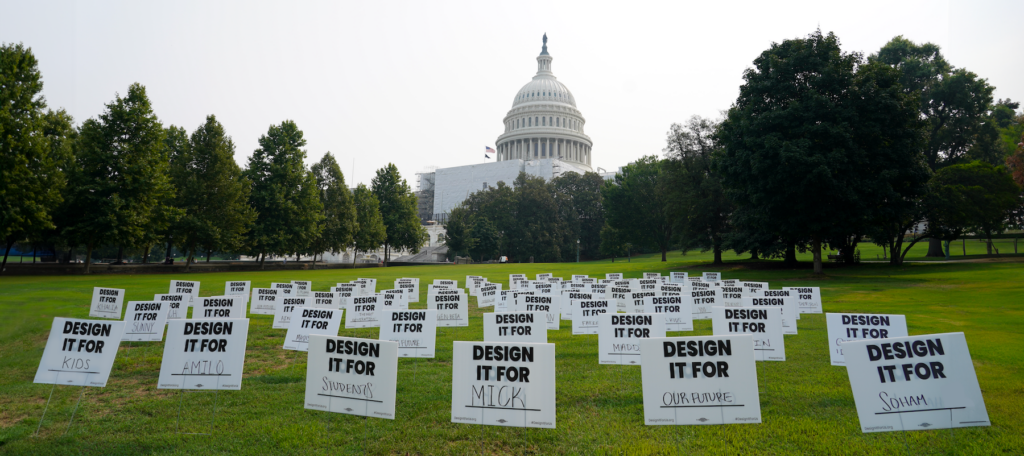
It’s been 25 years since Congress last passed legislation to protect kids online. But that can change now with two bipartisan bills advancing in the U.S. Senate: The Kids Online Safety Act (KOSA) and the Children and Teens’ Online Privacy Protection Act (COPPA 2.0).
What’s KOSA?
- KOSA would require social media companies to allow users to turn off engagement-based algorithms or options to influence the recommendation they receive. A user would be able to stop recommendation systems that are sending them toxic content, like disordered eating content.
- KOSA requires platforms to prevent and mitigate cyberbullying. It requires that platforms give users options to restrict messages from other users and to make their profiles private.
- KOSA’s duty of care would require platforms to consider and address the ways in which their recommendation systems promote suicide and suicidal behaviors, creating incentives for the platforms to do something about this problem.
What’s COPPA 2.0?
- COPPA would prohibit internet companies from collecting personal information from users who are 13 to 16 years old without their consent.
- COPPA would ban targeted advertising to children and teens and establish a “Digital Marketing Bill of Rights for Teens” that limits the collection of personal information of teens.
- The bill would create an “Eraser Button” for parents and kids by requiring companies to permit users to eliminate personal information from a child or teen when technologically feasible, and set up a right to revoke consent and have information deleted.
- COPPA includes a general requirement of companies to protect the confidentiality, security, and integrity of any personal information that is collected online from children.
Why should you care?
- Congress hasn’t passed internet protections in 25 years, which means that our online lives are managed by legislation that’s older than we are.
- KOSA is our best chance (due to the amount of political support) to pass strong protections for young people online, and COPPA is a highly overdue opportunity to establish privacy protections for young people that actually meet the demand of the environment today.
- These bills don’t ban content or communities, rather they force Big Tech to stop promoting harmful content through kids (like through the FYP), and to prevent the exploitation of our own personal data.
- KOSA and COPPA 2.0 were developed in partnership with young people from across the country. For over two years, the co-sponsors have worked directly with kids & teens from our coalition and from communities across the United States.
- If we don’t act now, Big Tech companies will continue to create products that exploit us.
Minnesota Age-Appropriate Design Code
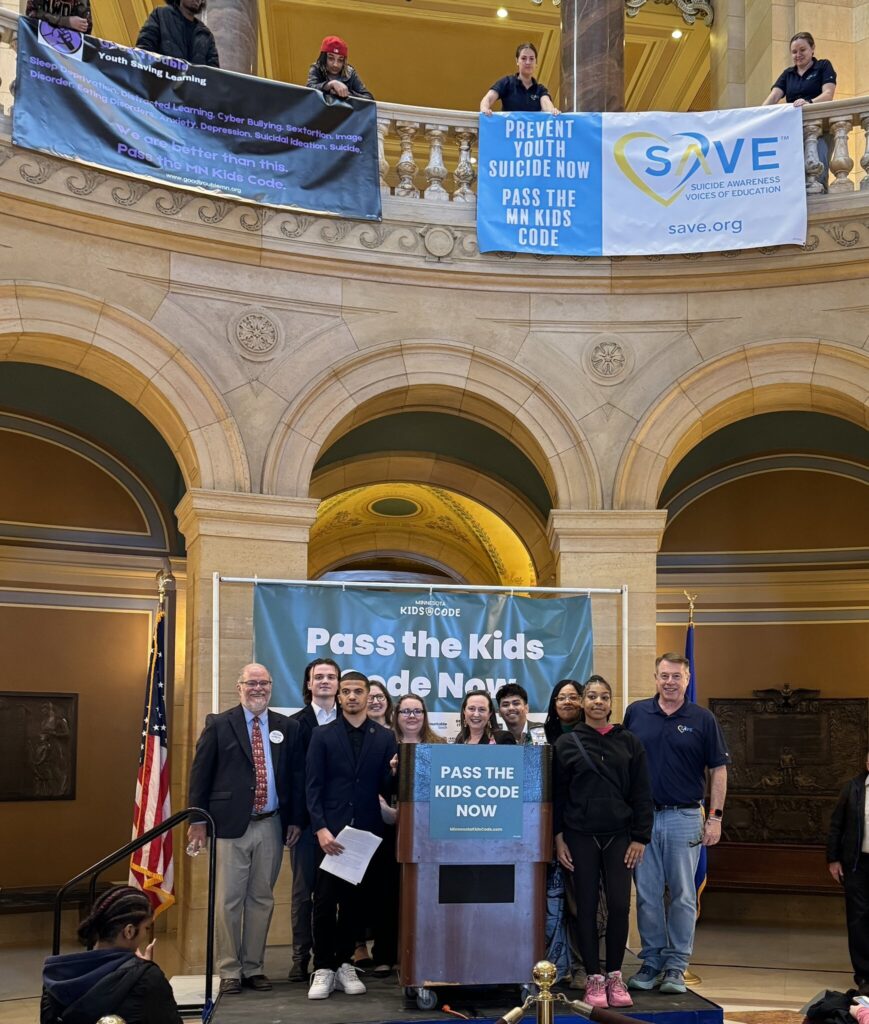
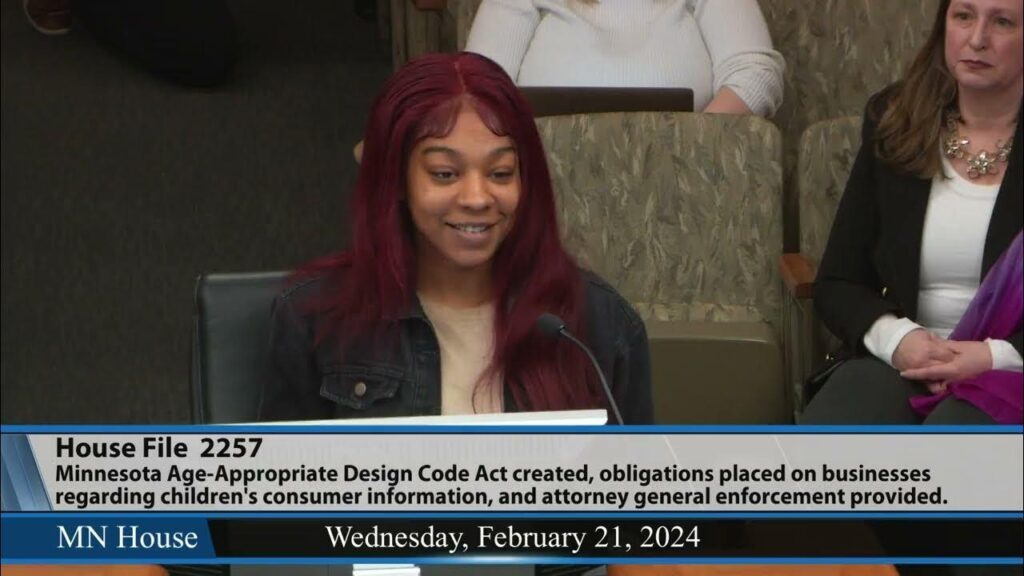
Introduced in 2023 and sponsored by Reps. Bahner and Elkins, the Minnesota Age-Appropriate Design Code provides safety-by-design and privacy-by-default to kids and teens online. Design It For Us advocates testified and rallied in support of the bill.

New York SAFE For All Act
The Stop Addictive Feeds Exploitation (SAFE) for All Act, sponsored by Senator Gounardes and Assembly Member Bores, would require social media platforms with algorithmic feeds to provide all users with the ability to turn off their user-personalization algorithm. It would also require platforms to allow users to turn off notifications and autoplay, as well as to set screen time limits if the user so chooses, and prohibit platforms from hiding behind “dark patterns.”