
Advocacy Category: State Legislation
New Jersey Kids Code
Public Safety and Child Protection Transparency Act
The model bill that coalition member Encode is working on has been introduced in states like Tennessee and Utah, which would require large AI companies to publish safety plans, protect children from chatbot harms, report dangerous incidents, and protect whistleblowers.
People-First Chatbot Bill
A model bill led by EPIC, the Consumer Federation of America, and Fairplay to develop the People-First Chatbot Bill, aimed at making chatbots safer for all users.
New York RAISE Act
Sponsored by Senator Gounardes and Assembly Member Bores, the Responsible AI Safety and Education (RAISE) Act requires the largest AI developers to develop a safety plan and incident reporting to protect against widespread harm and risks to public safety.
Illinois Age-Appropriate Design Code
Introduced in 2023 and 2024 and sponsored by Senator Rezin, the Illinois Age-Appropriate Design Code provides safety-by-design and privacy-by-default to kids and teens online.
California SB-53 AI Safety
Sponsored by Senator Scott Weiner, SB-53 mandates transparency, whistleblower protections, and disclosure requirements for the largest AI companies. In addition, the CalCompute framework promotes AI innovation and competition.
Vermont Age-Appropriate Design Code
Signed into law in 2025, the bipartisan Vermont Age-Appropriate Design Code provides safety-by-design and privacy-by-default to kids and teens online.
Minnesota Age-Appropriate Design Code
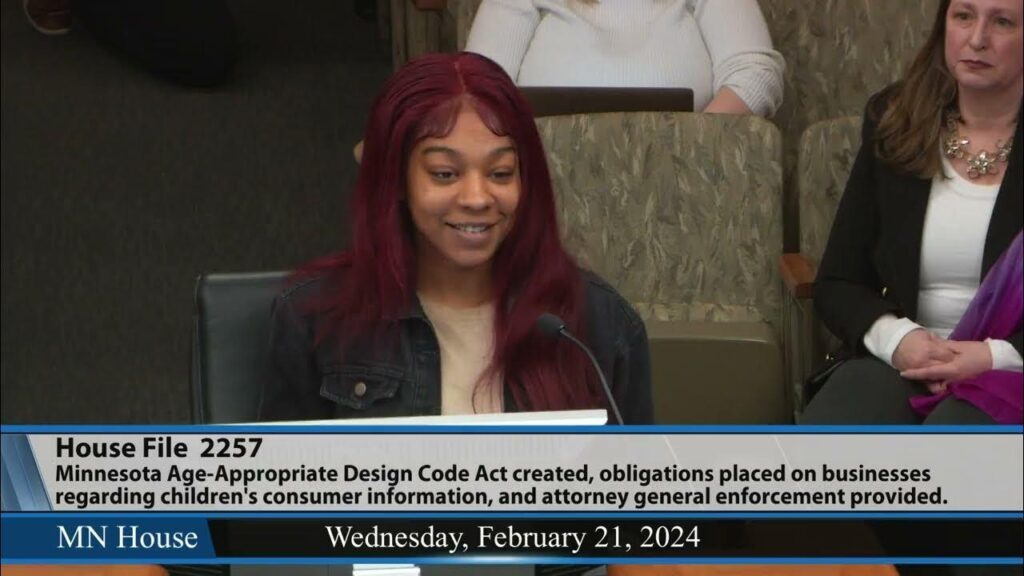
Introduced in 2023 and sponsored by Reps. Bahner and Elkins, the Minnesota Age-Appropriate Design Code provides safety-by-design and privacy-by-default to kids and teens online. Design It For Us advocates testified and rallied in support of the bill.


New York SAFE For All Act
The Stop Addictive Feeds Exploitation (SAFE) for All Act, sponsored by Senator Gounardes and Assembly Member Bores, would require social media platforms with algorithmic feeds to provide all users with the ability to turn off their user-personalization algorithm. It would also require platforms to allow users to turn off notifications and autoplay, as well as to set screen time limits if the user so chooses, and prohibit platforms from hiding behind “dark patterns.”